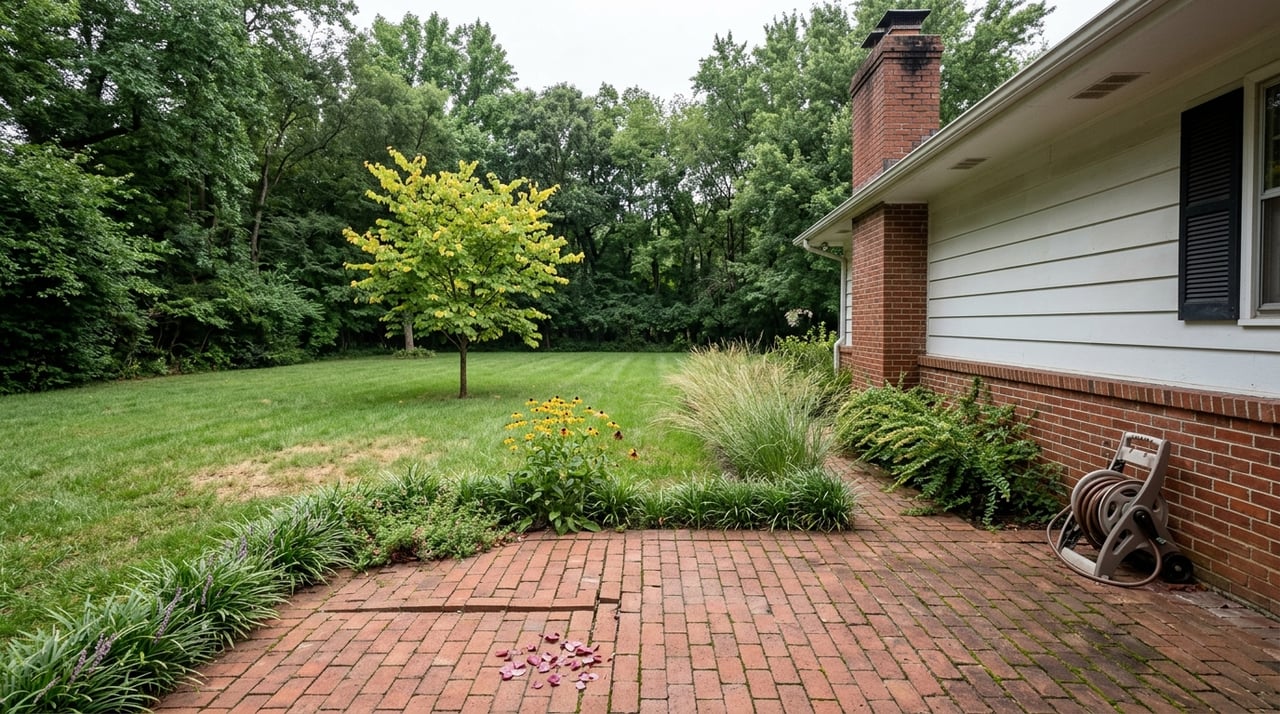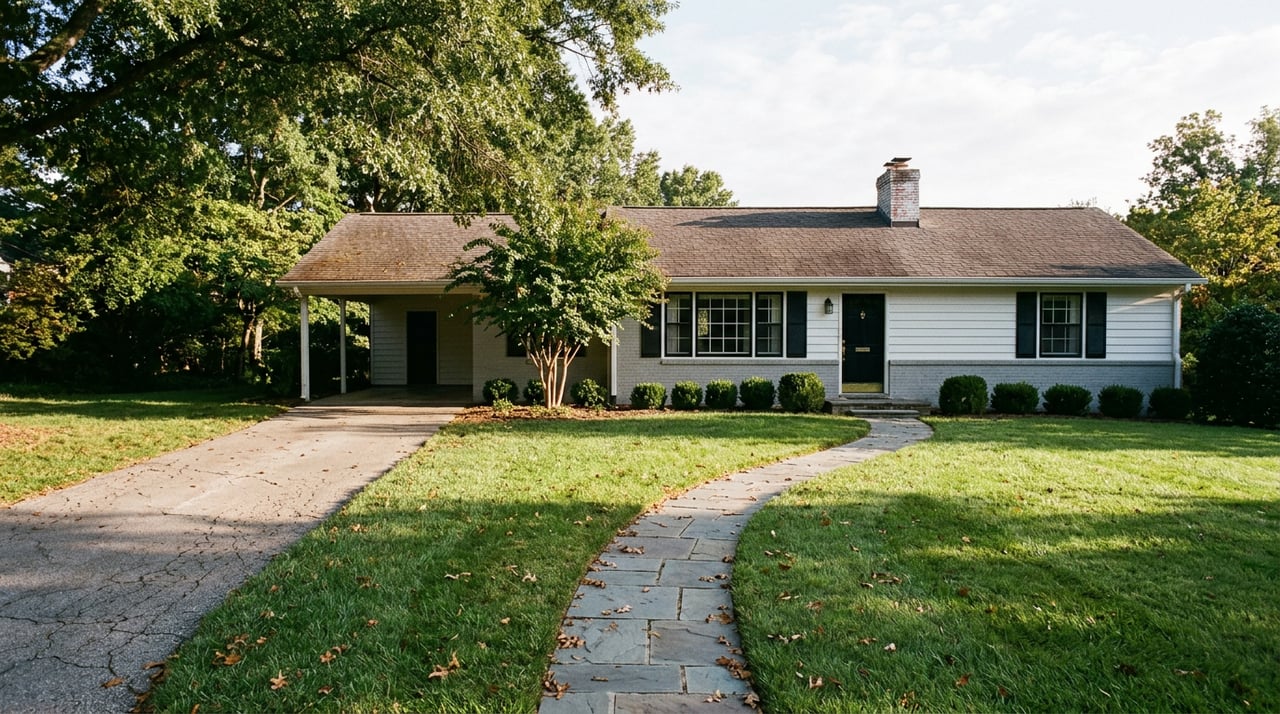
If you're touring a home in Tauxemont this fall, here's a question worth asking before you get anywhere near the kitchen: who owns the water, and what happens to it in 2028?
Most well-water guides you'll find online assume a straightforward setup. One house, one well, one inspection before closing. Tauxemont doesn't work that way, and treating it like it does is the kind of mistake that surfaces during due diligence rather than before you write an offer.
A Water System, Not Just a Well
Tauxemont was built by twenty families in 1941, most of them federal employees who pooled their money to buy 12.36 acres of former dairy farmland eight miles south of Washington for $5,680.10. There was no county water service in that part of Fairfax County at the time, so the founders drilled their own well, named it Tauxemont, and built twenty simple concrete-block houses designed by architect Alexander Knowlton. As the community grew, two more wells followed: Shenandoah in 1942 and Gahant in 1946. By the end of 1948, the neighborhood had 107 homes across three sections, all drawing from a single interconnected system.
That system still exists, and it's still owned by residents, not by a utility company. The Tauxemont Community Association, incorporated in 1949, operates the wells as a small stock corporation. Under its bylaws, the association can issue up to 50,000 shares, and new shares are typically only sold to people who own property in the community. In practice, that means buying a house in Tauxemont has generally meant acquiring a stake in the water system along with the deed. It's a detail that doesn't come up in a standard Northern Virginia well inspection, because it isn't a standard well. It's a shared utility with its own corporate governance, and anyone writing or reviewing a contract here should confirm with the title company exactly how that share interest transfers at settlement.
That ownership structure is also why the county left Tauxemont's system alone when it tried to consolidate private water systems in the late 1960s. The Fairfax County Board of Supervisors voted to let Tauxemont keep running its own wells. For more than fifty years, that independence has been part of the neighborhood's identity, right alongside the wooded lots, the absence of curbs and sidewalks, and the National Register of Historic Places listing the community has held since being recognized as one of the first suburban developments in Northern Virginia.
The Permit That Started the Clock
That independence now has an expiration date attached to it.
Tauxemont draws its water under a permit from the Virginia Department of Environmental Quality, and the current ten-year authorization to pull water from the Potomac Aquifer expires March 31, 2028. Under a 2024 change to state law, Senate Bill 337, that permit was extended rather than allowed to lapse on its original schedule. But the extension came with a condition: a future renewal isn't guaranteed, and it depends on the long-term health of the aquifer itself.
That caveat isn't hypothetical. A statewide groundwater study covering the region reported that the rise in Potomac Aquifer water levels has been slowing since 2021, with levels expected to enter a period of decline within the next five to ten years if current withdrawal patterns continue. State regulators have recommended giving Virginia explicit authority to deny future withdrawal permits where alternative water sources exist. Put plainly, the agency that controls whether Tauxemont can keep pumping its own water has told the community not to count on doing this indefinitely.
The DEQ has already required the Tauxemont Community Association to plan for an alternative water source before the current permit runs out. The association is now working through a transition to Fairfax Water, the regional public utility.
What Converting to Public Water Would Actually Cost
The community commissioned an engineering study from the firm Dewberry, which put the cost of converting the entire system to Fairfax Water at roughly $5.8 million. That figure covers adding new main pipelines through sections of the neighborhood that don't have them, relocating individual property feeder lines, installing fire hydrants and water meters at each home, and formally abandoning all three wells, a project made more complicated by the fact that the existing system is 85 years old.
The association also commissioned a legal analysis, which concluded that equal protection arguments might allow some of that cost to be shifted to Fairfax Water, Fairfax County, or the state rather than falling entirely on Tauxemont property owners. Whether that argument succeeds is genuinely unresolved. So is the funding question. The association has said it's pursuing government assistance and remains cautiously optimistic that the transition could ultimately cost property owners nothing. But it has also been direct that if that funding doesn't come through, the likely fallback is a special tax district that would amortize the cost over twenty years.
| If the transition happens | Cost to property owners |
|---|---|
| Government funding is secured | Association's stated best case: no direct cost to homeowners |
| Government funding is not secured | Cost spread over an estimated 20 years through a special tax district |
Fairfax Water's own engineers have told the association that the per-home cost will be lower if the neighborhood converts as a whole rather than owners disconnecting individually, and the association has been clear on one more point that matters for anyone weighing their options: disconnecting from the Tauxemont system on your own doesn't relieve you of your financial obligations as a shareholder in the association.
Why the Disclosure Question Looks Different Here
Virginia is a caveat emptor state. Under the Residential Property Disclosure Act, sellers fill out a form that essentially states they're making no representations about the property's condition. The legal burden sits with the buyer to investigate and ask direct questions. If you ask a seller whether a specific issue has occurred and they answer dishonestly, that's a problem for them. But sellers generally aren't required to volunteer information the buyer never asked about.
Tauxemont complicates that framework in an interesting way. The Tauxemont Community Association has already published a detailed update on the water transition on its own public website, in a section that specifically addresses real estate agents, lenders, and prospective homebuyers by name. That's not a document a buyer has to dig for through a records request or a phone call to the county. It's already sitting in plain view, written for exactly this audience.
That changes the practical calculus. In most Virginia transactions, silence on an issue the buyer didn't ask about is legally defensible. In Tauxemont, the association has made the underlying facts a matter of public record aimed squarely at people buying and selling homes. A listing agent who doesn't mention it, or a buyer's agent who doesn't check for it, isn't relying on the letter of caveat emptor so much as hoping the other side doesn't do their homework.
What to Actually Ask Before You Write an Offer, or List
If you're buying in Tauxemont:
- Ask whether the seller's TCA share interest transfers automatically at closing, and confirm the mechanics with your title company before settlement.
- Ask for the most recent water quality test results and well inspection records, even though Virginia doesn't mandate a well inspection at the point of sale. Many lenders will require testing anyway, particularly for bacteria, nitrate, and lead.
- Ask directly about the water transition timeline and whether the seller is aware of any recent TCA communications on funding status, since that status can change as the 2028 permit deadline approaches.
- If you're financing with an FHA or VA loan, confirm early how the lender treats a shared community water system, since standard guidance for private wells assumes a single well on a single lot, not a multi-well system serving over a hundred homes.
If you're selling in Tauxemont:
- Get ahead of the question rather than waiting for a buyer's agent to raise it. Pointing to the association's own public materials on the transition shows good faith and heads off a mid-contract surprise.
- Confirm your TCA share status is current and in good standing well before you go under contract, so it doesn't become a last-minute scramble at settlement.
- If you've received any recent updates from the association about funding or timeline, keep documentation on hand. Buyers researching the neighborhood on their own will likely find the same public page you did.
A Few Direct Questions
Does Tauxemont's water taste or test any differently than typical Fairfax County water? The research available doesn't address water quality comparisons, and that's a question best answered by a current water test rather than assumption.
If the transition happens, will every home be required to connect to Fairfax Water? The association's own materials note that even homeowners who disconnect from the Tauxemont system individually remain financially obligated to the association, so opting out doesn't appear to be a way to avoid the underlying cost question.
Is 2028 a hard deadline for losing water service? No. It's the expiration date of the current withdrawal permit, not a service cutoff. The uncertainty is what happens after that date if a renewal isn't granted, which is exactly why the association is planning now rather than waiting.
None of this makes Tauxemont a harder place to buy or sell. It makes it a neighborhood where the water question deserves the same attention you'd give a roof or a foundation, because it's genuinely part of what you're purchasing. A home here comes with wooded lots, a documented history, and a piece of a small, resident-owned utility that's approaching a decision point after eight and a half decades of running things its own way.
If you're thinking about buying or selling in Tauxemont, or anywhere else in the Fort Hunt and Alexandria area, Lauren Kolazas can walk you through exactly what a specific property's water status looks like before you're under contract. Let's Connect.